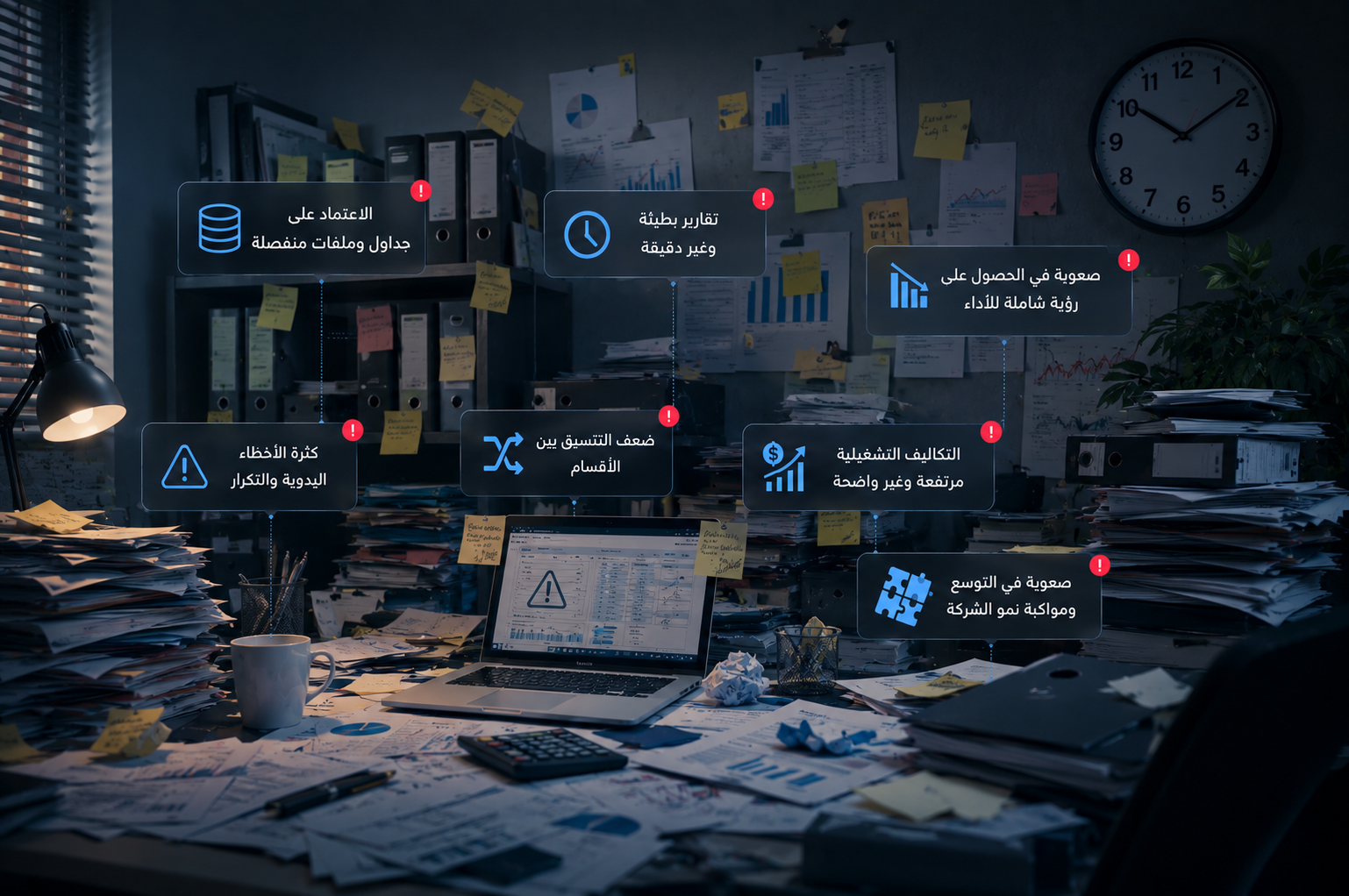
As businesses grow, managing daily operations becomes increasingly complex. What once worked with spreadsheets, emails, and manual processes may no longer be enough to support efficient growth.
Many small and medium-sized businesses start with simple tools to manage customers, finances, projects, and employees. However, as the volume of work increases, these disconnected systems often create bottlenecks, inefficiencies, and costly mistakes.
An Enterprise Resource Planning (ERP) system helps businesses centralize operations, improve visibility, and streamline workflows. But how do you know when it’s time to invest in one?
Here are seven clear signs that your business may be ready for an ERP system.
1. You’re Managing Everything with Spreadsheets
Spreadsheets are useful tools, but they were never designed to run an entire business.
If your company relies heavily on spreadsheets to track:
- Customers
- Sales
- Expenses
- Projects
- Employees
- Inventory
you may already be experiencing common problems such as:
- Duplicate data
- Version control issues
- Manual reporting
- Lost information
- Limited collaboration
As your business grows, managing critical information through spreadsheets becomes increasingly risky and inefficient.
An ERP system replaces scattered files with a centralized platform that keeps all business data organized and accessible.
2. Your Data Is Scattered Across Multiple Systems
Many businesses use separate tools for different functions:
- Accounting software
- CRM platforms
- HR systems
- Project management tools
- Inventory applications
While each tool may perform its role effectively, disconnected systems often create information silos.
Employees spend valuable time switching between applications, manually transferring data, and searching for information.
An ERP system integrates departments into a single platform, ensuring that everyone works with the same real-time data.
3. You Lack Real-Time Visibility Into Business Performance
Can you instantly answer questions such as:
- What are this month’s revenues?
- How much has the company spent?
- Which invoices are overdue?
- Which projects are profitable?
- What is the current cash flow situation?
If obtaining these answers requires collecting information from multiple sources, your business may be operating without the visibility needed for effective decision-making.
ERP software provides dashboards and reports that give business leaders immediate access to critical performance indicators.
4. Manual Processes Are Causing Frequent Errors
As operations expand, manual workflows become increasingly difficult to manage.
Common issues include:
- Duplicate entries
- Incorrect invoices
- Missed customer follow-ups
- Data inconsistencies
- Reporting errors
These mistakes not only waste time but can also affect customer satisfaction and profitability.
ERP systems automate many routine processes, reducing human error and improving overall accuracy.
5. Customer Management Is Becoming Difficult
Customer relationships are essential for long-term business success.
If your team struggles to track:
- Customer interactions
- Sales opportunities
- Follow-up activities
- Quotations
- Customer history
you may be losing potential revenue and damaging customer experiences.
Modern ERP systems often include integrated CRM functionality, allowing businesses to manage customer relationships alongside operational processes.
This creates a more complete view of every customer and improves sales performance.
6. Reporting Takes Too Much Time
Many business owners spend hours—or even days—collecting data and preparing reports.
When information is stored across multiple systems, generating accurate reports becomes a slow and frustrating process.
An ERP system automatically consolidates data from across the organization, making it easier to generate:
- Financial reports
- Sales reports
- Expense reports
- Employee performance reports
- Project status reports
This saves time and helps management make informed decisions faster.
7. Your Business Is Growing Faster Than Your Systems
This is often the most important sign.
The tools that worked when your company had:
- A few employees
- A small customer base
- Limited transactions
may no longer support your current level of growth.
As businesses expand, operational complexity increases significantly. Without proper systems in place, growth can lead to inefficiencies, communication issues, and reduced productivity.
An ERP system provides the structure needed to support growth while maintaining control over business operations.
Benefits of Implementing ERP at the Right Time
Businesses that adopt ERP before operational challenges become overwhelming often gain significant advantages.
Key benefits include:
- Improved productivity
- Better collaboration between departments
- Reduced operational costs
- Fewer manual errors
- Faster reporting
- Enhanced customer service
- Greater business visibility
- Scalable growth
ERP systems help organizations build a solid foundation for future expansion.
How to Get Started with ERP
Before choosing an ERP solution, evaluate your current processes and identify the biggest challenges your business faces.
Look for a system that offers:
- Ease of use
- Scalability
- Cloud accessibility
- Strong security features
- Comprehensive reporting
- Customer management capabilities
- Financial and operational management tools
The right ERP platform should support both your current requirements and your future growth plans.
Conclusion
ERP systems are not only for large enterprises. Small and medium-sized businesses can benefit greatly from having all their operations connected within a single platform.
If your company is struggling with disconnected systems, manual processes, limited visibility, or operational inefficiencies, it may be time to consider implementing an ERP solution.
Recognizing these signs early can help your business improve efficiency, support growth, and make better decisions for the future.